Friday, 14 August 2015

CB "Richard" 15 & 16 August

Classical Break:  Richard

(This programme is repeated from February 2013)

Track 1:  Twelve Little Pieces For Violin and Piano, Preambule, Parry


Hullo.   This is Classical Break on Somer Valley FM, and I’m Rupert Kirkham.  Today’s programme, on British music was written and researched by Mike Burrows.  You have just heard The Preambule - To Gwen (Allegro) from Sir Hubert Parry’s Dvorak-tinged collection of Twelve Short Pieces For Violin And Piano of 1894.  Gwen was the younger of the forty-six years-old composer’s daughters.If calculated to please her, it must surely have succeeded! -  If it is a species of portrait, its hummable, out-of-doorsish but slightly distrait melody with odd asides shows Gwen in a very appealing light.

Now for an orchestral work of some topicality, thanks to recent events in a Leicester short-stay car-park....


The Shropshire-born composer, Edward German is remembered, if at all, for the faded comedy of light operas such as Merrie England and Tom Jones, but as an ambitious young man was highly successful in the field of Art-music - symphonies, overtures and orchestral music of a freshness and complexity admired by many colleagues, including Elgar.  Influenced by Dvorak, Tchaikovsky and other non-Germanized continental lights, his style is one of contrasts, sombre fervency and lyrical grace, fleetness and strenuous, often sequential argument, seized-on triplets or other groupings of notes that sway backwards and forwards in the grip of drama, hushed passages and cymbal-capped points of tension.  The orchestration is bold but subtle in doublings.  Here is the Shakespearian Overture, Richard The Third.   

The fugal part of the development was subject to one of the Wagnerist George Bernard Shaw’s sillier shafts as a music-critic for the newspapers; he affected to think that  the fugal entries could have no other dramatic meaning than that numbers of little Richards  were leaping up from trapdoors to chase one-another around the stage.  In fact, this colourful and cogent Overture on the subject of Richard of York, brother of a king, magnate of the North, wicked usurper-uncle and last Plantagenet king, is more accomplished than the satire of German’s critic, to be seen as a character--study and curtain-raiser rather than a summary of the play.

Track 2:  Overture:  Richard The Third, German


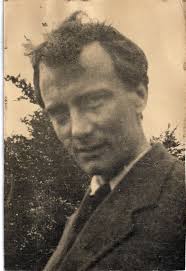
Charles Wilfred Orr, born in Cheltenham, in 1893, the son of an Indian Army Captain of means, was educated until the age of fifteen at Cheltenham College, where the study of music was regarded as strictly extra-curricular.  After service in the Artists’ Rifles that saw him invalided out of the army with eczema before he could be posted to France, he cast around for a career until correspondence with Delius decided him on the profession of music.  He studied at the Guildhall School and seemed set on a life in London when ill-health enforced a return to Gloucestershire.  He moved to Painswick, where he lived a quiet life removed from metropolitan rivalries until his death in 1976.  His metier was song-writing, and every song has about it the quality of having been chosen out of personal necessity to express in musical terms the meaning found in the verses, the voice male, the piano unfolding strong but richly lyrical patterns in accompaniment and commentary.  Through Delius, Orr had met Peter Warlock, and the influence of Warlock - as of Warlock’s hero, Delius - on his work is clear. Chromaticism sighs under melodies shaped sensibly to the words set.  Rhythms rock gently throughout the more reflective examples, but monotony is avoided in matchless subtlety.  Here’s Orr’s setting of the Rossetti sonnet, a haunting evocation of Summer in the long grass, Silent Noon.  Written in 1921, it is very different from the famous, more numinous version by Vaughan Williams - soft, but not decadent, sensitive but fresh, sensuous but not cloyingly sensual.  Orr scoffed that the Vaughan Williams resembled too much a voluntary: one suspects that Warlock - instrumental in getting Orr’s song published - would have loved this haut-en-bas opinion on what Vaughan Williams himself would have thought love-music and nothing to do with church!  And perhaps Orr knew how to be on the right side of his friend’s satirical, anti--pastoral, anti-ecclesiastical streak.

Track 3:  Silent Noon, CW Orr


Three songs in contrasting moods by Gloucestershire’s finest song-writer, now.  Whilst a War-invalid in Edinburgh, Ivor Gurney, twenty-eight years old <actually twenty-seven,ed> fell in love with a nurse, Annie Nelson Drummond.  For a time he dreamed that he had found a soul-mate in this well--spoken, middle-class Edinburgh girl - she was actually a little older than he was - who showed interest in his abilities, as who wouldn’t!  He asked his sister to have his cap-badge gilded as a keepsake for her, and joked to a friend that Annie had money, something that he hadn’t known at first...  The romance fizzled out after he was discharged and posted to the shrammingly bleak depot at Seaton Delavel, on the Northeast coast, to prepare for a return to active service.  He was convinced that he wasn’t well, suffering from palpitations that he tried to steel himself against.  His father was sick with cancer of the stomach, and there seems to have been a séance held at which Gurney was present and perceived the spirit of Beethoven: -was this a practical joke got  up against him by mates who found him unworldly?  However unmaliciously the prank might have been intended, it would have destroyed his self-image as a scholar and artist capable of mucking in with the best.  What had his fellow-soldiers ever thought of him during his time with them, the men whom he had loved and those of them whom he mourned?  As to the true circumstances of the seance, during which Beethoven had favoured him, no-one will ever know.  (To add to the complexes arising, he came out of this strange meeting convinced that he was in telepathic communication with his father).  At any rate, just as all the cares of the world and soon-return to the Front were weighing on his shoulders, Miss Drummond ended an affair whose seriousness she may not entirely have realized, although Gurney was never less than forthright in relationships, ideation or cherished hopes. Four songs were written for this cool muse.  One of these, perhaps setting own words, is the beautiful, fey and verbally a little gauche Song of Silence.  Nothing more sweet and poignant has ever come of a hospital crush.

Track 4:  Song of Silence, Gurney

Our second song by Gurney is the irresistible Walking Song, setting  words by his friend, the poet from Minsterworth, FW Harvey, in delightful, throwaway manner fixing his love of his home-county and of the wooded hills outside Cheltenham, extolling Cranham ways, rather than the City!  Only the British can be so mildly riotous, and Gurney so wittily humorous?  As Principal at the RCM, Parry, whose music we heard at the outset of this programme, is said to have seen Gurney the entrance-candidate’s submitted manuscripts and been reminded of the hand of Schubert; seeing Gurney for the first time, he exclaimed, “Good God, it IS Schubert!”  Here’s Walking Song, by Ivor Gurney.

Track 5:  Walking Song , Gurney

For our third song by Gurney, here is Dreams of The Sea (words by WH Davies). In this smouldering, passionate piece, the lad who as a boy had lived not far from the exotic bustle of Commercial Road and port of Gloucester, expresses a love that never left him.  As a student in London, that lad wore habitually a reefer-jacket.  All his life, he admired sea-goers, explorers, wanderers over the oceans; his poetry shows what a gift he had for capturing the sea in all its moods - it matched him passion for passion and its salt depth and power as well as sight and sound entranced him (Baudelaire at Honfleur would’ve been one with him here) as invitation to a voyage.  If you have stood by the sea on a day of irresolute feeling that you projected onto the waves, you will sense every eidetic image in the intent vocal line and its various, yet mesmerizing harmonic and rhythmical piano-accompaniment. 


Track 6:  Dreams of The Sea, Gurney


Another graduate of the Royal College, For many years, Gustav Holst worked as music-teacher at the St Paul’s School For Girls in London, a perfect haven, this job, for a composer.  Amongst his most famous works were two sets of pieces for string orchestra, the St Paul’s Suite and Brook Green Suite, for performance by his pupils.  The second movement of the St Paul’s Suite, Ostinato, is highly characteristic of his technically brilliant but touchingly direct invention in these miniatures, as light as air, playful and wistful.  Perhaps he had the liveliness, hopes and unwitting poetry of the young girls in his charge in mind:  here, such qualities seem to be expressed in the flutter of textures, breathless harmonics and artlessness of the nursery rhyme-like melody.

Track 7:  St Paul’s Suite, Ostinato, Holst                                             


The opening flourishes - and a recurring motif of - Edward Gregson’s Symphonic Study for Brass Band, The Plantagenets owe something to the music for the wizard in Holst’s The Perfect Fool.  Rachmaninoff’s 3rd Symphony may be another ghost summoned up by play made with duple and triple rhythm.  Other moments later may remind of the dark chants and chomaticism of Ireland’s orchestral piece Legend.  To seek to express in musical material of adequate worth something of the character of England’s and Wales’ longest-reigning Royal dynasty in a single movement is a young man’s job, and Gregson was in his twenties when he wrote The Plantagenets.  A striding, all--purpose ‘swashbuckling’ theme is of its time - the 1970s - and less imposing, but soon broken up by cornet and trumpet fanfares and more lyrical strains based on ‘Holst’, slowed elements of the theme and ‘Ireland’.  The Holst flourish brings in a Waltonian fugato - reaching the gallop! -  and the reprise.  The close is curt, the bold bass-drum beats peremptory. This composer has rightly made a name for himself as a gifted and effective writer of brass-band music.

Track 8:  The Plantagenets, Gregson. 


To end our quodlibet, a work from the close of Sir Edward German’s composing life:  written for the Royal Academy of Music’s centenary in 1922 - the year in which Ivor Gurney was certified and removed to a mental hospital -  the Tone-picture for Orchestra, The Willow Song is a kind of developing fantasia on the old traditional song “A Poor Soul Sat Sighing’.  It represents something of a reaction against German’s ‘popular manner’, while retaining to the full his skills in orchestration, with varied use of woodwind and strings, including harp, and strong but controlled use of brass.  The falling fifth contained in the tune’s opening phrase becomes like a fate-motif.  The overall sound is recognizably German’s in the combination of instruments from different sections, particularly from strings and woodwind, and a sighing or soothing quality distantly Tchaikovskian but now more reminiscent of Elgar.  The Willow-song occurs in Shakespeare’s tragedy Othello - Desdemona, the slandered young wife of the jealous moor sings it artlessly in her chamber shortly before he confronts and strangles her for her supposed infidelity.  As the fantasia dies away into a time more remote than Tchaikovsky or German’s hey-day, one wonders if this beautiful miniature is an obvious celebratory tribute to the college that he had attended as a young student. Its muted colours, intense atmosphere of grief and scarcely sublimated hurt are representative of a composer at the height of his powers, one who has won through to real vision and constructive skill, building on the objective donnée of a folk-song by an unknown author...  No bitterness, just hurt.    “To tell the truth, I’m afraid to write anymore, they would only laugh at me...”  “I die a disappointed man because my serious works have not been recognised...” 

This was Classical Break on Somer Valley FM, and I’m Rupert Kirkham.  Our programme was researched and written by Mike Burrows. We hope you liked it and will join us again.

Goodbye!

Track Nine:  The Willow Song, German


Friday, 7 August 2015

8th & 9th August 2015 - Benjamin Britten


 This programme was first broadcast on August 31st, 2013


Classical Break - Benjamin Britten

Benjamin Britten 1913-1976
Hunt the Squirrel – 1.20

Hello and welcome to Classical Break. I’m Rupert Kirkham.

Today’s programme features music  by one of England’s finest composers, Benjamin Britten.

November 2013 saw the hundredth anniversary of the birth of Britten, in Lowestoft, on the Suffolk coast, the coast where he lived and composed for much of his life, where he built an opera house and a festival, and where he died in December 1976.

The son of a dentist, he studied at the Royal College of Music in London and privately with the composer Frank Bridge. He was a brilliant pianist and had a phenomenal understanding of the capabilities and limitations of all the instruments in the orchestra.
One of the last pieces of music Britten composed, he undertook in 4 weeks between October and November 1974 – two years before his death. This was the Suite on English Folk Tunes, opus 90, from which our opening piece today was taken. Subtitled, “A time there was,...” after a phrase in a poem by Thomas Hardy, the Suite draws from a number of English folk songs and tunes. We heard ‘Hunt the Squirrel’ – an appropriate little number I felt as we ponder the rights and wrongs of the badger-culling experiment in Somerset that has just begun. There’ll be more from Britten’s Suite on English Folk Tunes later in the programme.

But  let’s hear next, a piece of music originally written by the man to whom the Suite on English Folksongs was dedicated – a collector of folksongs himself, the Australian composer, Percy Grainger. Molly on the Shore.


Molly on the Shore - Percy Grainger – 3.49

Molly on the Shore, by Percy Grainger. That came from a collection of Grainger’s tunes re-set by Britten called ‘Salute to Percy Grainger’.
Britten, the conductor
Next, we have one of Britten’s most well-known works, from his Variations and Fugue on a theme of Purcell, also known as ‘The Young Person’s Guide to the Orchestra’, here’s the fugue.

Fugue from Young Person’s Guide to the Orchestra – 2.40

Like most artists, Britten drew his inspiration from life. He lived, as I mentioned earlier, on the Suffolk coast – a wild and desolate place, so it’s not surprising that some of his music reflects the strength and beauty of the sea. In his opera, Peter Grimes,  Britten  chooses a story that is not only  set in a coastal fishing village, but also features a character with some of the problems faced by Britten as a homosexual in a country that for much of his life, could have incarcerated him.
He says of the Opera ‘(It is) a subject very close to my heart – the struggle of the individual against the masses. The more vicious the society, the more vicious the individual.'

Set in the early 1800’s Peter Grimes is a fisherman who is accused of killing not one, but two young boy apprentices. The action is broken up by 4 ‘Sea Interludes’ The climax of the action takes place during a huge storm.
Here’s the Storm interlude. 
Peter Grimes
Storm interlude from Peter Grimes – 4.13
The Storm from Britten’s opera, Peter Grimes.

You’re listening to Somer Valley community radio on 97.5 FM and online at somervalleyfm.co.uk. I’m Rupert Kirkham and this is Classical Break. If you want to hear this programme again, or get your friends to listen go to the website and click LISTEN AGAIN. It’s that simple.

Today in the 100th anniversary year of his birth, we’re listening to music by Benjamin Britten.

Britten at home
Let’s head inland now for another number from Britten’s Suite on English Folk Tunes. Something  one assumes good country folk used to knock back whilst watching the morris dancers do their stuff outside the village pub in days of yore  – cakes and ale.

Cakes and Ale from English Folk Tunes – 2.24

When I was a lad, I was lucky enough to sing as a treble in the Choir at New College, Oxford. It was undoubtedly an incredible way to learn about music, and whenever we saw that we were to perform something  by Britten our spirits rose. There’s only so much Palestrina and Gibbons you can handle in a week of evensongs!

Our next pieces come from one of the magical experiences Britten gave me as a chorister – the singing of his Christmas collection, ‘A Ceremony of Carols.’

Here are three carols from the piece, Wolcum, There is no Rose and Deo Gracias.

A Ceremony of Carols
Ceremony of Carols: Wolcum, There is No Rose, Deo Gracias – 5.00

We’ll hear some more music for choirs later, but first I want to play you part of Britten’s song cycle, The Serenade for Tenor, Horn and Strings.

The libretto is a series of poems by British poets on the subject of night. It was written in 1943 when Britten and his partner, Peter Pears – had just returned from 2 years in America and Britten was preparing his first  large scale opera – Peter Grimes – which we heard about earlier. It’s scored for horn and small string ensemble and the piece has become a central work in both Tenor and Horn repertoire.
Peter Pears, Tenor
In three of the songs, Prologue, Pastoral and Hymn, Peter Pears is the Tenor, Barry Tuckwell plays the Horn and the band is the London Symphony Orchestra, conducted by the composer, Benjamin Britten in a recording made in December 1963.

Serenade for Tenor, Horn and Strings – 7.00

Now we’re going back to the chapel to hear another of Britten’s choral works. It’s his Missa Brevis in D and he dedicated it to George Malcom and the boys of Westminster Cathedral Choir. It was first performed in 1959 on the occasion of Malcom’s retirement as organist and choirmaster.

Actually, this  performance is by the boys of King’s College Cambridge, with Ian Hare at the organ and Sir David Willcocks conducting.

Missa Brevis in D – 10.05
This is Somer Valley FM and I’m Rupert Kirkham. Today the programme features music by Benjamin Britten.
Britten and Pears
Now it’s back to the song cycles. Britten’s texts for his song cycles operas and other works came from various sources. The text for his song cycle, Les Illuminations – sung in French – probably came from the library of WH Auden, who was a friend of Britten’s with whom he collaborated on a number of projects.

Les Illuminations is based on a set of rather risqué poems by the French poet Rimbaud, written, some say, under the influence of mind-altering substances. They certainly are pretty wierd, but quite advanced for around 1873 when they were written.

Arthur Rimbaud was one of the most important precursors of modernism in poetry although his entire output was created in the space of 3 years and it was probably this that attracted Britten. Rimbaud was also ...er ‘connected’ to a fellow poet Paul Verlaine and following a series of rather public scandals involving Verlaine, Rimbaud put away his quill and set off for Asia and Africa as a travelling salesman, never to be heard of again. Britten would have liked that too!
Set for Tenor or Soprano and strings, we’re going to hear 3 ‘Illuminations’ – Fanfare, Ville, and Marine. There’s that sea again. The first and third are sung by a tenor, Peter Pears, in fact, with the English Chamber Orchestra conducted by the composer and the second by the soprano, Felicity Lott on a 1989 Chandos CD with the Scottish National Orchestra conducted by Bryden Thomson.

Les Illuminations: Fanfare - Ville - Marine  – 5.15

In 1940, just before they bombed Pearl Harbour, the Japanese government commissioned a series of works to mark the 2,600th anniversary of the founding of the Japanese Empire. The next piece was one of those commissions.

Sinfonia Da Requiem is a symphony written when Britten was 26. It’s in 3  movements, and is probably Britten’s largest orchestral work for the concert hall.

Anyway, the Japanese rejected it because he used Latin titles for the movements taken from the Catholic Requiem and because it was too sombre for them. To be fair, it’s not something you’d play at a children’s party. I remember when I was at school, I used it as interval music for our touring  production of Shakespeare’s Julius Caesar. It was just about long enough for the interval and suitably demonic for the kind of capers to come in the second half of the play.

Some say that the tone of this piece was influenced by the recent deaths of his Mother and Father.

Here’s the second movement, performed by the London Symphony Orchestra under Richard Hickox.

Dies Irae.

Sinfonia da Requiem - Dies Irae – 5.27

I hope I’ve shown you some of the diversity of music produced by this outstanding English composer, Benjamin Britten. He was truly an icon in the musical 20th century. His music is edgy, but accessible and it takes risks. Some of his music doesn’t get played much these days, which is a shame, but in this 100th anniversary year, you are likely to find performances of all kinds from musicians at all levels around the country honouring his contribution to the English musical heritage.

In this programme we haven’t even touched on his contribution to the education of young schoolchildren through his school operas – Noye’s Flood, for example. I hope that in Classical Breaks to come this year we can play you some of this fine music which so many schoolchildren have experienced and which, one hopes, has inspired them to not only tolerate, but actually take an interest in ‘classical’ music amidst the cacophony of sounds and images that are thrown at them every second of the day.
Noyes Flood
Lecture over. We leave you with Jubilate Deo, a good example of Britten’s simpler writing. It’s a short anthem, written in 1961 at the request of the Duke of Edinburgh for St. George’s Chapel, Windsor. Goodbye.

Jubilate Deo – 2.21

Friday, 31 July 2015

CB Gurney/Milford 1 & 2 August 2015

CB Gurney And Milford


This is Classical Break on Somer Valley FM, and I'm Rupert Kirkham. We weren't sure whether to call this programmeTwo British Outsiders, or Two British Composers Who Regarded Themselves As Outsiders?


Ivor Gurney's Cello Sonata went unknown, unplayed, for over 90 years. It was written sometime after his return from war-service and a year before he was certified, perhaps in about 1921. It was just one of the many works that he composed at the time, stimulated by return to studies at the RCM, and latterly, by defiance when those studies lapsed. Its single movement-structure is unusual in the genre. Some hold that it was the first movement of a multi-movement piece left incomplete, others that it was intended to be self-standing in a tripartite, possibly part-dissolved sonata- or fantasia-form. As with Sibelius' later experiments in symphony, argument among commentators seems vain. Music was not made for form; form was made for music.

Hints of Gurney's own E flat Violin-Sonata first and third movement and setting of Housman's poem Into My Heart an Air That Kills haunt this piece. The outset is calm – the cello and piano exchanging opposing brief phrases that hold a wealth of shared trouble and stoicism, also, beauty - the folkish cello's question answered by quizzically ambling piano, whose part is deceptively casual in effect. Deceptive because continuation – continuous development - soon becomes impassioned, though not violent, in canon, block chords and filling-out from the piano. There are at least two climaxes between asides of brown study, in which the baleful implications of theme or harmony are revealed – in the second climax, one seems to arrive at the cold clay bleakness through bare harmonic instability of parts of Butterworth's Rhapsody: A Shropshire Lad, or Vaughan Williams' Pastoral Symphony, a collision between academic, diatonic or chromatic, and more down-to-earth modal, procedures. Consistent growth causes it to be most effective. Canon and imitations, though not fugue, suggest the influence of Brahms. The piece is very tightly argued throughout, the elliptical cello line abetted by insistent rhythm in the piano in which stress tends to be heavier on the second beat. The music tends to involve sequences of three steps answered by three steps. Much appears enigmatic even after the last climax. The close is sudden, with the sense of having come full-circle: as in the slow movement of the Sonata in E flat, this music seems to steal into the major only at the last moment.

It is as far into austere, interval-generated, organic development as one may ever have heard Gurney go. It sounds like a near-thirteen minute cipher, and fascinates by such means, rather than by the contrast between outer and “inner” dynamics found in the Violin Sonata in E flat, or any other piece from Ivor Gurney's lamplit room. There are very few high notes for the cello – it is abetted by the piano that rambles with two hands on either side of its line.

The restricted rhythm adds to the sense of intriguing mystery. One seeks and knows to go on seeking. One senses open air, whether or not one has one's thought amid the severe grandeur of Cotswold hills or their deep, stealthily aromatic woods. The moments of release are rare, and the eyes may see for miles but the mind dwells on the thoughts of one's setting out.


Track One: Cello Sonata, Gurney (12.50min)


That was Ivor Gurney's Cello Sonata, music of a lonely, powerfully thoughtful man. A close friend said of him, "Ivor could only ever do things in his own way..." - but that was his, not our, misfortune.


Throughout much of his life, Gurney was a lonely walker, often by choice. On Service in wartime, he loved nothing better than writing letters home – real free rambles of letters – or of seeking flowers, wildlife and ancient works in the French countryside behind the British lines, the Somme plain and hills standing in, one feels, for the loveliness to him of the Severn Plain and Cotswold steeps that rear up with suddenness, yet all on a smaller scale. It would have been his habit to go accompanied when in France, of course: and, surely, one could have had no better companion as talker, naturalist and poetic historian. Mostly, in peacetime, few were free to walk with him. In the asylum, he walked in imagination, save when taken out to see the sea, or a visitor (Helen, the widow of Edward, Thomas) brought him Ordnance Survey maps to look at... Another view may be that the music of works like the cello sonata has the regularity of detail of church architecture – narrow-spaced intervals opening out in sweeps of stone in three planes for those who choose.


Now, music by another lonely, thoughtful man, one perhaps less confidently powerful! Robin Milford was born 13 years after Ivor Gurney. Where Gurney had been the first son and second child of a tailor, Milford was born late to the affluent family of a founder of the Oxford University Press. Where Gurney's family had been nonplussed, even thunderstruck, to be the kin of a musical genius – or bloody resentful as they were scarcely fools themselves, but had never been afforded his advantages – Milford's kin were public-school- and Oxbridge-educated academics and top civil servants, high-achieving, well-known and well-regarded in their upland fields. Robin sang to himself in such an environment, where, whenever possible, Gurney had lit out, to use Huck Finn's expression, even when attending King's School, Gloucester and serving as an articled pupil of the organist of Gloucester Cathedral.


No, Milford was “sivillised” - to use Huck Finn's word of dread. All the same, he learned the flute and piano whilst at Rugby and studied with Holst and Vaughan Williams at the RCM – lucky not to be a pupil of Gurney's nemesis, the bluff, exacting and rancorous Professor Stanford - Gurney had written of this mighty establishment-figure as“That python!” After his studies, and having friends like Ralph Vaughan Williams and Gerald Finzi, to back him, he wrote first songs, then works of increasing length and ambition. He fairly quickly made his name when he turned to full-time composing; received regular commissions from local festivals, his works published and performed to acceptance as Gurney's had rarely been - yet continued to see himself as the family failure. Milford's music is a study in subtle tones, marrying modal folkishness and, through the example of Warlock and Grieg, if not Delius or Moeran, expressive chromatic harmony. There's use of certain courtly features of a baroque or earlier fantasia and arioso-style, though the counterpoint is less developed than that found in Finzi or Rubbra, less, therefore, of a principle that dictates form. Melodic transformation is underpinned by traditional working out of intervals within contrasting themes, exploring their kinship, working from contrast to unity. Milford's style is anything but obvious; often, its spell remains strong and pleasant after a hearing, but it's precise turns are hard for the unpractised musician to memorize. It is melodious, wistful, haunting, well-proportioned, occasionally attempting a darker effect, whereat its inhibitions are plain. Assuredly logical in working out, it is rarely emphatic, its courtesies extending to exquisite – but practical – scoring, the influence of Holst.


The themes of his Phantasy for Clarinet and String Quartet, Opus33, dating from the period of his maturity, in 1933, contrasts its first major theme for violin over other strings – the clarinet birdcall-like then in urging a moment of exquisite sadness - and the second for clarinet with strings-accompaniment from the beginning. The first is incisive, utilizing Scotch snaps (and, as polite as it is, oddly related to the brusque first subject of Sibelius' First Symphony), the second utterly original in its half-wistful, half-humorous jog-trot, whose overall effect is ingeniously innocent. There had been nothing quite like that second theme anywhere in chamber-music, in 1933! Its idiom recurred in the work of Bernard Herrmann. Improvisatory, related themes abound between the two, all with a sweetly reflective or active folkish air, one with an Appalachian flavour, another, more brief, with downright shades of Vaughan-Williams – and Milford proceeds to extract the most that he can out of them all in variation, segmenting, juxtaposition and ordering, in the shortest possible time. All ends very suddenly, hushedly, but not unhappily. A lovely work.


Track 2: Phantasy Quintet, Op 33, For Clarinet and String Quartet (11.29min)


A depressive, he was never confident or outgoing, and enlistment in the Army brought on a breakdown in
1940. After prompt discharge, he returned home, but the following year,lost his only son, Barnaby, to a car-crash. Somehow, with the help of his wife and friends, he lived for some years longer, but the deaths of Finzi, in 1956 and Vaughan-Williams, in1958, were great blows – Finzi was only two years older than he was, and his closest confidant. In 1959, life dealt him a last cruelty: his works were dropped from the
Oxford University Press catalogue. He committed suicide shortly afterwards.

The Welshman from Balham, Edward Thomas, was the poet closest to Ivor Gurney's vision. Gurney was a fine poet himself, but, in words, did not always have Thomas' ability to nail a profound philosophical idea with
the use of simple, universal images from nature and unpretentious diction whose natural observations and conversational cadences owed much to country life and the sayings of countrymen. Manner disguised the truth that Thomas was one of the more scholarly and widely-read poets – and literary critics - of his generation:the matter - and self-critical acuity behind its shaping – did not.


A lover of many forms of poetry, Gurney set the work of most of his contemporaries of note, outside the Imagist or Vorticist camp, creating lovely songs that demonstrated the strength of the English poetic tradition. He found a continuity between Elizabethans and Jacobeans and his as-beloved 20th Century Georgians and older, perhaps unwitting, associates of Georgians.


Thomas died before he could become a Georgian. As an ex-soldier, Gurney proceeded to set Second-LieutenantThomas's poetry with a will. Nevertheless, his cycle, Lights Out, for Baritone, Piano and String Quartet took seven years to gather, and was completed three years into his confinement at The Stone House, Dartford, Kent, far from the Gloucestershire that had been his only real home.


The cycle was once recorded in the 1960s, but among critics, there were felt to be too many places in which Gurney's mind failed to shed light on his or Thomas' purpose, or in which he failed to remember even the text of the poems – changing odd words as seems to have been his practice – he learned a phenomenal number of poems by heart and travelled light - the odd line was missed out altogether.

Here, the texts have been corrected, if you enjoy the pointillistic, yet continuous orchestration made by Jeremy Dibble, object-lesson of its kind though it is, you may wonder why the cycle was not given in its original dress in this new recording, in which the misrememberings and omissions perpetrated by the composer have been made good. As Schumann said of a Liszt transcription of a song by Schubert: “Wonderful! So wonderful, indeed, that one was left in no doubt of how good the original must have been.”

The first song of the cycle is The Penny Whistle, an evocation of a charcoal-burners'-encampment. Since the days of George Borrow, gipsies, vagabonds, charcoal-burners and other livers in the out-of-doors had exerted a powerful charm over writers horrifiedat the materialistic and worseningly illiberal development of urban, industrial Britain in the 19th and early 20th Centuries. In the pincers of “regular employment” and Workhouse, Self-Help and villa--vulgarity, this was understandable. Here is a symbolistic yet utterly down-to-earth picture of a girl and boy sitting by the charcoal-burners' caravan-hut in a forest-clearing, the boy playing the penny-whistle of the title, the girl reading a letter by the light of an ivory bugle-like crescent moon. They may be charcoal--burners, but the washing on the line and letter are white, the caravan-hut gleams like a kingfisher amid the darkness of Winter and charcoal-burning. Gurney's treatment of this beautiful poem is characteristically free, feeling and idealistic; the drone-effect under a trilling piccolo at the opening, and flecks and mixed-scoring swells of orchestral tone provided by Dibble may well be like the colourizing of a black and white photograph or etching. The free-wheeling, moment-by-moment setting is characteristic; it may be noted that it is also shapely and touching, its accompaniment harmonically complex, but pin-sharp.

Track 3: The Penny Whistle, Gurney (2.53min)

Thomas and Gurney loved the very idea of husbandry of garden or farm. Both used physical labour – or
long walks - to ward off, palliate or overcome attacks of depression and debility. In Scents – Thomas's own title for this poem of Autumn was Digging - the gardener-singer thinks only in scents, but a Thomas or Gurney recollecting without four of his five senses is unimaginable! This poignant piece hymns the attraction of soil, the lovely distinctness of living things that grow in it in season – and all that goes to the fire, come Autumn... The fullness of a life so simple and yet life- and earth-aware! In his work, Gurney's tenderness never failed.

Track 4: Scents, Gurney (2.27min)

Bright Clouds: Reflections in a pond on a bright Spring day – like a Chinese or Japanese poet, Thomas and Gurney, in verse and music, summoned up brilliant, deeply-felt lyrics in response to a little bright-clouded sunniness on water.

Track 5: Bright Clouds, Gurney (1.32min)

Lights Out. Poet and composer knew equally the pain of overwork, anxiety and longing for rest. Thomas wrote as a soldier of the Royal Artillery, hearing the last bugle-call of the day at Lydd, honestly tired, on the borders of sleep, sinking without choice into its shelf on shelf of forest – losing his way, and himself... As an ex-soldier, Gurney tried to go without sleep, perhaps owing to nightmares. In this metaphysical song, he finds a harmonic resource and drooping form of strophic song-speech that may anticipate the method of Benjamin Britten. The nobility of Thomas was honest, self-testingly backed-into – an attitude that Gurney understood well.


Track 6: Lights Out, Gurney (4.27min)

Will You Come, a teasing love-song is given dry but charming treatment by Gurney, the disappointed lover. Nothing involving the heart or mind was simple for the happily-unhappily-married Thomas, either, even for the sake of a folkish love-song! Gurney doesn't ignore the shrewd if not awkward clauses of this piece, but finds the ideal melodic touch.

Track 7: Will You Come, Gurney (1.42min)

If you noticed the ivory bugle in The Penny Whistle, so, no doubt, did Private Gurney. Thomas' poem on the subject of Reveille, The Trumpet, prompted not one but two settings by him, one for choir and instruments, and this one to conclude his Thomas-cycle. Edward Thomas found himself in the army, at the expense of his wife and children, all the doubts and physical suffering caused by discontented marriage, commissioned literary work and a pre-diabetic condition that caused blistered feet when forced to wear standard-issue boots, at last receding to his something-like-satisfaction. The purging of the aesthete and hack left the makings of a fine, highly professional officer of immaculate uniform, shaven head and clipped moustache, though he wrote verses in the mess (setting them out like prose on the page to conceal his eccentricity), and retained his habitual clay-pipe to the end.

Gurney found another self, the perfect blend of the subversive squaddie and capable fighter, smart, learned and readily excused by his Sergeant for his outrageous scarecrow-appearance at an inspection in the line: “He's a musician, sir.” On active service, and well-aware that they were not alone, neither Thomas nor Gurney showed fear when in danger. The Trumpet, the anticipation of danger as experienced in the old wars is a rousing poem. Gurney's late setting, wayward, veering and yet ultimately trenchant and thrilling, shows the old fire and defiance of terrors that had ruined his every hope of health or happiness.

Neither Gurney nor Milford would have wanted to be remembered for their tragic lives, and when you hear their music, you hear much that is strong, honest and transcendently beautiful – the music of two highly individual, brave and believing souls, to whom the acquisition and use of musical technique was worth giving up their lives to, come what might. This was Classical Break on Somer Valley FM; I'm Rupert Kirkham. Today's programme on music by Ivor Gurney and Robin Milford was researched and written by Mike Burrows. We hope you liked it and will join us again soon. Goodbye!


Track 8: The Trumpet, Gurney (2.02min)

Friday, 24 July 2015

July 25th & 26th - the Dulcimer Man

Classical Break - The Dulcimer Man (rpt from 2014)

This week, Classical Break goes on location all the way to Frome to meet one of the country's only makers of Hammered Dulcimers.


Tim Manning produces at least one instrument every week at his tiny workshop in The Hub at Frome's Welshmill, for individuals, teachers, retailers, record producers and even opera companies. 

In the programme, Tim explains what dulcimers are - the different types around the globe, their history and how he makes them. In addition, of course, there's music from some of the world's most renowned hammered dulcimer players, listed below, in order of performance. Tim also demonstrates the instrument and plays some music that he has written for this unique forerunner of the modern-day piano.

Thanks to Tim Manning for giving us his time. Click the link to go to his website.

We hope to run a series of programmes about local instrument makers and local instruments of note. In the works - a man who builds pianoforte instruments, the newly refurbished and repositioned organ at St John's Midsomer Norton, the Klais organ in Bath Abbey and the Rachmaninov piano at the Holburne Museum in Bath.  


Track one:  Theme from "The Ipcress File", John Barry, 1965
The distinctive theme is played on a Hungarian Concert Grand Cimbalom which is the Hungarian version of a Hammer Dulcimer. The instrument is bigger than a Hammered Dulcimer, the size of a small piano. Barry was very fond of the instrument and used it for a number of theme tunes.

Track two: Paul Haslem, The Fordwich Jig. trad
Track three: Ted Yoder, "Praise to the Lord" trad. hymn
Track four: Howie Mitchell, "Matty Groves" American trad.
Track five: Karen Ashbrook,"Prelude, Cello Suite #1" J.S.Bach

Track six: Jim Couza, "Los Ejes De Mi Carretta". 1983 by American born british resident Jim Couza from the album Music for Hammered Dulcimer. Probably the most well known Hammered Dulcimer player the UK has ever known.!

Other tracks by Tim Manning

Tim plays us out of the programme with a composition of his own.


If you know any instrument makers in the area, give us a call on 07913 742401 or email rupertkirkham@gmail.com and we'll try and include them.