Friday, 23 June 2017

24th & 25th June - D Day

Classical Break remembers  
D-Day (June 6th, 1944)


Track One: Sea-surf FX, Drum-beat - Vee For Victory. Marche Lorraine


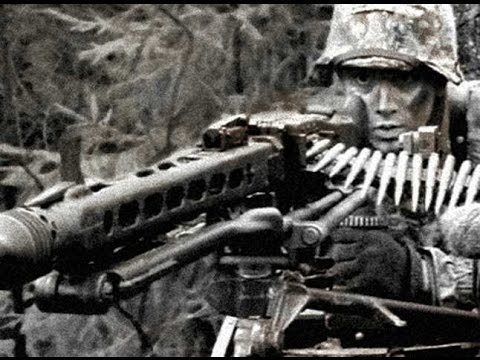
This is Classical Break, and I'm Rupert Kirkham. You've just heard the Marche Lorraine by Louis Ganne. Today's programme celebrates the heroism of the Allied troops, sailors and airmen who formed the massive forces of land, sea and air engaged in the biggest amphibious operation in military history. D-Day, the Sixth of June, 1944, opened the last eleven months of the Second World War in Europe: the achievement in breaching the long-prepared North Atlantic fortifications via 5 Normandy beaches, codenamed Sword, Juno, Gold, Omaha and Utah was shared by the crews of 532 warships and 360 coastal craft of the Royal Navy, 89 American warships, 49 warships and smaller craft manned by Dutch, French, Norwegian, Greek and Polish exiles, and 155,000 Allied troops, over whose voyage and advance on landing, thousands of fighter- and bomber- sorties were flown by men of the RAF, USAAF and Fleet Air Arm; some hours before the landings, hundreds of transport aircraft had dropped 23,000 paratroopers in behind the German defences by 'brolly”, 'chute or glider.
Over 4,000 British and American landing-craft were employed in bringing the invasion-force from their troopships to the beaches...
The balance of an army of 3 million men were left behind in England, waiting on the results of gaining a foothold in France. The free flow of vital supplies had to be kept up; a fuel-pipeline – Pluto - was being laid across the Channel seabed, and huge artificial harbours – code-named Mulberry - were to be towed to France and used by freighters until Cherbourg were captured.
On the day, the heaviest losses were taken by the paratroopers and air-force crews during the hours of darkness, owing to the Luftwaffe Night-hunters, flak-defences and infantry units, and by American Rangers on Omaha beach, at the head of which stood high cliffs that had to be rushed and scaled in the face of mines and heavy fire. 3,000 men became casualties on Omaha beach alone.
Perhaps the most terrifying and convincing film-representation of Omaha is found in Steven Spielberg's Saving Private Ryan. Men died or were badly injured by withering machine-gun-fire, mines and shells, while still in their landing-craft; men drowned; when the ramps came down, men dropped in the shallows; men fell at every step of the way up the beach; yet those left climbed ladders to reach the German barbed wire, pill-boxes and come to conclusions hand-to-hand or by grenade and flame-thrower with brave or ruthless opposite numbers.
In a far cry from his work on such features as ET, the Indiana Jones-franchise and Jurassic Park, the American film-composer, John Williams'. carefully somnambulistic music for this terrible confrontation between weaponry and young men – and History - invokes the spirit of Lincoln, via Copland, with sombre, brazen textures and angular pentatonic fanfares and harmonies.
Track 2: Omaha Beach, from Saving Private Ryan, John Williams
Of course, if the Germans had not expected the invasion to occur in the Pas-de-Calais-area rather than Normandy; if they had been able to mount pre-emptive heavy bombing-raids on the bases at which men and material had been amassed, and on the major ports at which the fleet had been gathered, or if the Luftwaffe
had met force with force over the beaches...casualty-figures should have been far higher than even those
suffered by airborne forces and by those who had landed on Omaha beach.
The lack of opposition from the air astonished most who took part in D-Day. Some of the best Luftwaffe units were based in France, in spite of withdrawals to Germany and the Eastern Front. Throughout the day, a single sortie was flown over Sword Beach by two German Focke-Wulf 190 interceptors The pair made a single sweep at low level that the forlorn pilots had been convinced must end in their deaths. They cut a swathe through Allied troops before leaving only more quickly than they had arrived.
The first many German ground-units knew of D-Day was the frontal vision of a vast fleet of ships – and they didn't have sight of it for long before they were ducking under heavy naval bombardment or trying to fire back.
The preparations for D-Day had been long-drawn-out, reaching a height of activity in the late Spring and early Summer. Something of the mood in Britain can be gathered from two films straddling the period, A Canterbury Tale and Henry The Fifth. The one weds the themes of pilgrimage, English cultural tradition and the Anglo-American relationship, the other, the oft-played and digested moral of British heroism and victory
against the odds. The names and art of Chaucer and Shakespeare were well-invoked. By the mid-1940s, thanks to readiness and modern methods of surveillance, the game of invasion had become an overwhelming hazard; no matter how many soldiers, aircraft, tanks and warships were thrown into the assault, a coast and deep defensive lines remained an unknowable obstacle; covering fire from however many ships and aircraft perhaps drawn from other fronts or other activities, might still encounter an impassable wall of enemy resistance. The Allies had to win their goal – and know how to follow it up. Overwhelming weight of numbers and equipment had suffered great reverses in Sicily and on mainland Italy, owing to strategic inco-ordination, friendly fire and brave defence. The channel's small breadth rendered the invasion-fleet highly conspicuous from first to last. From the commanding officers to the other ranks, shrewd, individual courage from conviction had to be the modern military's strongest resource. A Canterbury Tale was released in Canterbury on May the 11th, 1944, Henry The Fifth, in London, on the 22nd of November, 1944.
Here is the rousing Prelude to A Canterbury Tale, music by the Polish emigre, Allan Gray.
It quotes Angelus Ad Virginem, as a pilgrims' hymn, at the outset. The verses from Chaucer's Prologue To The Canterbury Tales are read beautifully by Esmonde Knight – who took the part of Fluellin in Henry The Fifth, and, who, in A Canterbury Tale, plays two roles, those of a sergeant and a village idiot! How the phrase in the high chorus haunts the mind after seeing this beautiful black-and-white film of rural and Canterburian South-east
England ..
Track 3: A Canterbury Tale, Prelude, Gray
From Sir Laurence Olivier's Henry The Fifth, accompanied by the galvanic music of Sir William Walton, Speech Before Harfleur - part of a re-recorded sequence in which the actor adds Chorus' commentary at the conclusion. From the same source follows soldier William's reflections on the cause for which the commoner fights, “But if the cause be not good”.again voiced by Olivier, and Henry's second great speech – urging on his men to stand to at Agincourt – “This day is called The Feast of Crispian”.

Track 4: Speech Before Harfleur
Track 5: But if the Cause be not good
Track 6: This Day Is Called
The assembling of Brahms' Requiem occupied him so long that it only began in the shocking fate of his short lived friend and advocate, Robert Schumann. It came to be a requiem for his beloved mother as well. It is A German Requiem; in settings of Lutheran biblical texts; it seeks to console the living, rather than to sing a mass over the dead. Nowhere is the name of Christ invoked. Brahms was not only nominally a Lutheran, he was an agnostic or atheist who saw life in all its grandeur, complexity, and ethical significance, but who was unable to believe in the saviour of the New Testament. “Such a great man,” Dvorak once said, “and he believes in nothing!” Reactions to the long, slow, patient and hugely learned Requiem have ranged from ecstasy to the decrying of its bourgeois wearisomeness. Its immense span ends in its beginning, with the music of the opening providing the close: grief is never assuaged, never forgotten, but over the course of seven movements, one has a sterling spiritual experience of circularity, of psychologically acute and compassionate ariosi and Handelian heights of choral and orchestral counterpoint that symbolize the positive moods and actions of social and cultural tradition and survival. Consistent musical logic and lyrical beauty in severe style are put at the service of sincere grief and fellow-feeling. The spirit is far from the Protestant work-ethic that may underlie the composer's development. This is not workfare-music any more than it is the
music of any church-sect or of Nazi strength through joy.
Such a great man, and he believes in nothing...” Is that true?
If Beethoven gave the free world its Vee-For-Victory signal, we invoke Brahms as the 19th Century German nationalist who accorded a wreathed portrait of Bismarck a place of honour on his wall, but who would certainly have loathed the Kultur of Nazism, even if still almost unaware of its abysmally evil crimes. Let's hear “Herr, Lehre doch mich”, the third movement, in honour of the men who drove and ran up to death, or who stood to in the defensive wall. “Lord, make me to know mine end” Darkness appears to surround the lonely baritone voice. This extract from a complete recording of the German Requiem in English, conducted by Arturo Toscanini, who had himself flagrantly opposed Fascism and emigrated, was made in 1943. Some American servicemen may have heard it.. The individual is borne up at length by the contrapuntal chorus of what may comfort him, by the example of his righteous fellow-sufferers – all rest in the hand of God. This piece may have struck Dvorak to the heart; a prominent falling phrase from it turns up in his powerful 'Cello Concerto of many years later.
Track 7: lll Herr, Lehre Doch Mich from Ein Deutches Requiem, Brahms
From the Piano Sonata no 2, Concord Sonata, by Charles Ives, the second movement, The Alcotts – a home
to New England Transcendentalism in the 19th Century. Transcendentalism is the word, as so often with this composer, for whom concord was to be reached-after by mortal man. An astonishing, elegiac and uneasily beautiful piece. Note the Beethovenian gesture from long before Vee-for-Victory was thought of. Beethoven was a Transcendentalist before Transcendentalism was thought of.
Track 8: The Alcotts from Piano Sonata No 2, Concord, Ives
For three months before D-Day,The Glenn Miller Band – renamed the American Band of The Allied Expeditionary Force kept up a gruelling schedule of concerts in the South of England. Here's their cover of Summertime,from Gershwin's pre-war opera, Porgy and Bess. The arrangement exhibits to the full Glenn Miller's trademark micromanagement of scoring and expressiveness – of contrasts between orchestral sections and bold use of mutes. How peace must have been longed-for.
Track 9: Summertime, Gershwin
This was Classical Break, on Somer Valley FM, and I'm Rupert Kirkham. We hope you have enjoyed our programme in commemoration of D-Day, dedicated to all who took part in this massive but heroic action – or who faced it; to the men on both sides, many of whom have lain in peace in the same cemeteries these 70 years. We thank Mike Burrows for researching and writing it. He keeps in mind Sapper James Kenyon, who worked on the Mulberry temporary harbours used in the days after the landings.

We end with The Day Thou Gavest. 
Last Post and Sunset. Goodbye.
Track 11: The Day Thou Gavest & Last Post & Sunset

Friday, 9 June 2017

10 & 11 June - Butterworth

George Butterworth.
(Script has been slightly edited to fit the timeslot)

This is Classical Break on Somer Valley FM, and I’m Rupert Kirkham. Today’s programme, written and researched by Mike Burrows, is a tribute to the composer, George Butterworth.
George Sainton Kaye Butterworth was born in 1885, the son of a lawyer and managing-director on the railways, and died as a Captain in the Durham Light Infantry during the Battle of the Somme. At about dawn, in August 1916, leading his company in action near Pozieres he was killed instantly by a sniper in a moment of sleep-deprived unconcern for his own safety. As a soldier, he had liked to lead from
the front; here, he had made an elementary slip and raised his head too high. Posthumously awarded the Military Cross, he lived up fully to what had been expected of him and thus to the example of his grandfather, an army General. Like many of his contemporaries of the privileged middle-classes, he died as a junior officer fighting the Hun, his last moments spent caught up in the crossfire of an attack in the blasted landscape of a sector of the Western Front, his body never recovered, his name added to the famous Thiepval Monument to many of those Allied troops who were killed in France or Belgium between 1914-18 and who have no known grave. The monument stands not far from where he was killed. At the time, the earthwork in which he fell became known as The Butterworth Trench.
Let’s hear an arrangement of a folksong arranged by him, one of his 11 Sussex Folksongs, Roving In
The Dew. He collected 3 versions of this song himself, under the title, Dabbling In The Dew, but
for this arrangement used a version taken down by another researcher.
Track 1 Roving In The Dew, Arr Butterworth 
It is doubtful that George Butterworth ever had thoughts of living up to his Grandfather’s example. Though an Old Etonian and graduate of Trinity College, Oxford and one who would have regarded himself as the social equal of most of the more famous victims of the meatgrinder in the teens of the last Century –the first-rate Tennants, Grenfells Asquiths and Horners of this life - was no conventional patriot, no Tory, no euphuist in any aspect of existence.  Whether learning or teaching music – he 
taught at Radley – he was an artist of close mouth and practical activity. He was a physically strong,
man who smoked a straight Lovatt briar, grew the expected flourishing moustache and tended to look as though smiling at the eyes – lucent eyes crinkled at the corners, the lower lids subject to upward pressure from his cheeks, humorous eyes, their humour with a touch of irony or scepticism, perhaps.
They were also watchful eyes. A graduate in Classics, he attended the Royal College of Music from 1910, a late starter in the College’s eyes – though a composer from the age of 9 - who knew where
he was going. The courses disappointed him, leading nowhere; he left after a year. He had the clearest ideas of form and modern harmony and had made a study of folk-music, becoming a staunch member of Cecil Sharp’s Folksong Society. He had worked through the expected influences of the day that wrecked the work of lesser talents; Wagner left his mark, possibly Grieg or Debussy and possibly, at the outside, the colourful and ingenious style of Slavic instrumentation. He remained the most analytical and clearminded of critics, and certainly cut through musical problems for that late-developer, Vaughan Williams. At the end of an evening, he took his pipe out of his mouth to suggest in his abrupt way that Vaughan Williams write a 2nd Symphony, The London Symphony, and Vaughan Williams dedicated it to him before its premiere in 1913. When Butterworth died, Vaughan Williams felt as though utterly bereft; there’s the matter of his having volunteering for war-service as an ambulance-driver but, in time, changing his battlefield vocation to become a Royal Artillery officer. Perhaps
the death of Butterworth contributed to this decision.
George would not have been impressed by talk of his bravery in encouraging his men – mostly hardbitten ex-miners - to one more effort, or by admiration of his Military Cross – which only officers could win. His men loved him, but that would have made the error seem all the more stupid. He would have kicked himself for making the mistake made by chivalrous idiots just posted up from home, clever lads who forgot to duck or who had no idea how hard it were to dodge the bullet of an unseen assailant – the speed with which death could be dealt in a modern War in France.  As a composer, George Butterworth’s work has come down to us as a proof of his technical ability as well as pure expression; he seems the most humane but poised of artists, a man who, quite possibly attained the very highest degree of feeling and polish; not one of his works appears blemished by extraneous or awkward details or developments. They appear to have been distilled and perfected by a musical magician. He must have destroyed volumes of early pieces before leaving for France – if not sooner. His complete oeuvre 
consists of four orchestral pieces, a couple of single songs – one setting Requiescat by Oscar Wilde after the death of his own mother, three song cycles – one based on poems from Stevenson’s Songs of Travel, two on the Shropshire Lad poems of AE Housman, one on poems by WE Henley, Love Blows
As The Wind Blows, a book of arrangements of 11 Sussex folksongs and – most famously – the ever-fresh four orchestral pieces, the Two English Idylls of 1911, the Rhapsody: A Shropshire Lad, (1912) and An Idyll: The Banks of Green Willow (1913).
The Folksong movement in English music has been decried by modernists and so-called internationalists ever since its co-opted member-composers came to fame. Not one of the brilliant
minds who have pointed out that the world of folksong nostalgically revived was invalid as a form of
artistic expression because dead on its feet even as it was obtruded on the minds of sophisticated Rightwing intellectuals, or just plain substanceless when contrasted with industrial machine-reality, has
managed to extirpate the public’s love of its Art-music. The point has so often been missed that
folksong-and-dance formed the musical means of self-expression and entertainment of ordinary people who did not attend Public School or University or hire a suburban piano. Ordinary people toiled and died without mark save birth, marriage, census and funeral – unless they attained the charge-sheet, or entered the Workhouse.
Let’s hear the two English Idylls. The first is based on three folksongs: Dabbling in The Dew, whose
subject is unsuccessful wooing, Just as The Tide was Flowing, a story of successful wooing and Henry Martin, in which a man turns to piracy on the high seas in order to support his brothers!
Track 2: English Idyll No 1, Butterworth 

Butterworth’s use of alto instruments is a shading feature – voices we made of oboe, clarinet, violas, cellos, horns, trombones. The light and freshness comes from flute, harp, solo trumpet, violins. In rounding out the story how effective his harp runs are. The bass is unobtrusive but mobile or 
provides pedals of depth – a depth of earth like firmness. The interplay of instrumentation is lively. His use of harmonics and mutes is as breathtaking in its elemental scene setting as is his sense of drama
and tragedy. Full throated, his orchestra is a formidable force from which both Holst and Vaughan Williams and many other composers learned, as the deep earth settled on its perhaps one time Wagnerist only begetter. Constantly, the blending of timbres is both subtle and unerringly distinct.
In the English Idyll No 2, the folksong is Phoebe and Her Dark-eyed Sailor: in it, a girl encounters a sailor; he seeks to win her; she refuses the confident well-set up lad until she suddenly realizes that he is her betrothed who went to sea and was thought to have drowned. He tried and made his fortune.
Track 3: English Idyll No 2, Butterworth 
People had flocked from the poverty-stricken land to the cities, where pay was supposed survivable. The cities swelled with increasingly cheap labour with predictable results. Thousands were killed young
by machines, dust or fibre-polluted atmospheres and toxic agents, or by a home-life best imagined from the prints of contemporary artists. The workhouse – the being a charity-case – was merely dreaded more than work or a cholera- or typhoid epidemic. No wonder many folksongs sing bittersweetly or longingly of love, usually lost love, betrayal, death or some other form of separation, dalliances while going or coming from somewhere, or sailors, the season or life-occupation, the
possibility of making one’s fortune – with plenty of fireside beer, warming spice and baccy as well. It has to be remembered that at his most utile (and, coincidentally virtuous), the common man or woman was young, fit, unmarried, politically submissive and an abstainer from drinking, smoking and sexual
relations. When rich enough to feed, clothe and house children on one wage, well, a man and woman
could marry, settle down and breed fit young children of the same make. After all, at a higher
differential, this was how professionals not of independent means ought to live, to the glory of God and
Capital, and everyone knew what the alternative was – to be a pauper and expected to die. Moral force was with wealth and the employer; even the established church, socially enmeshed with the gentry and middleclasses, would not or could not ameliorate the conditions created by tyrannical Mammon, yet one had to conform.

The conflicts in AE Housman’s A Shropshire Lad are many; but central to Butterworth’s probable view of them would have been that between living in the countryside or coming to live and work in the
City, in London, as Housman had done, and having to hide one’s own very nature. Facing up to
an inimical, godless universe of chance and ill-fate, and to society’s capacity for damning short-lived man’s non-existent soul to cowering under the threat of social disgrace and even capital punishment as a criminal was a peculiarly Victorian dilemma – particularly after the trial of Oscar Wilde. The covertly homosexual Housman described himself as an Epicurian, and Butterworth likewise was no believer in the Christian God, but both must have felt themselves still to be swimming against the tide of middleclass conventional religion, politics and morality. Both loved the countryside, the seasons, the general goodheartedness of unsophisticated people. The countryside and country folk were still there, still sang and danced in reaction to life. The beauty of Butterworth’s orchestral evocation of Spring in the Rhapsody is superfine from the opening on string harmonics, but also as though of Nature itself. The woodwind, violins, violas and cellos shade the music to perfection, the brass affirmatory of
warmth, youthful happiness or dread fate. To judge from the use of harmony, Butterworth’s study of music must have included the works of Richard Strauss. I’d venture to suggest that no Straussian nor expressionist composer achieved a starker, harsher climax than that of this piece in which vaulting
fanfare builds and is broken by the tritone as in Sibelius. A moment of horror that stays with
one. (The whole tone scale from the harp at close may symbolize death by drowning). The day is
not saved by the Loveliest of Trees motif that has opposed it, all along, but by the phrase of last line of the song. “To see the cherry hung with snow.” Butterworth’s modification, qualification or distortion
of song-themes is a brilliant  and original feature of his orchestral work: he develops them as might
a symphonist. He searches out the harmonic implication or resonance to the last drachm (dram) or scruple. The harp’s rippling wholetone scale near the end has been suggested to symbolize a self-drowning.

The main theme of the Rhapsody, by name, Loveliest of Trees, is a folksong that was in fact
entirely Butterworth’s own. In its original form, it is the first song in his first cycle of Shropshire Lad settings. He ventriloquized Housman’s and Great Britain’s Lad in a song indistinguishable from those that move by every means but the intentional. To adapt Wilfred Owen, the poetry of the art-musician inspired by folksong is in the pity. No wonder the soldiers of his company thought so well of him.
In Butterworth’s music it is never, to use the Masefield couplet, “The smoke of all three farms lifts blue in air/As though man’s passionate mind had never suffered there.”
Track 4: Rhapsody – A Shropshire Lad, Butterworth 
Turn to 1913 and another orchestral Idyll, The Banks of Green Willow, based on two folksongs, the
first eponymous – a woman elopes with a captain, believes that she will die in childbirth and begs him
to throw her over the side – and the second, Green Bushes, in which a fickle maid finds a new lover.
It’s interesting that every Butterworth orchestral piece is in an arch construction:  first, there is the proposition of a beautiful tune and contrast material; then, there is a vehement quasi-development section; lastly, there is a restatement of the opening material – long drawn out, becoming hushed, fading into a dying fall, almost unbearably poignant, nostalgic, regretful but too touching not to be consoling and unforgettable 
Track 5: The Banks of Green Willow, George Butterworth 

Perhaps folk-music survived even the worst of the 19th Century’s murderous advancement of Feudal Capitalism as the basis for a modern society, partly thanks to the Folksong Society and young composers from privileged, even landed, backgrounds who bothered to listen and hear; folk-music was popular self-expression more real than music-hall popular songs or polite villa-ballads provided by paid hacks who might have wished to write symphonies. It was national self-expression; it came of the people, the nation rather than its rulers – as glorified by the latest in Art music-technique, those, for one thing, who bothered to note it down as played or sung, not as taught by the Brahmsian, Dvorakesque Professor Stanford. Modal, not diatonic, pentatonic folk-music could be embellished by being played over chromatic harmonies, subjected to direct strokes of development, manipulation, transformation, even counterpoint – and gain. There was never the intention to seem sophisticated. Sophistication is
not a positive value – it means capable of glib persuasiveness. Not exactly a desideratum in one who pays tribute to the victims of the 19th Century British holocaust who, trapped and left with little or no real comfort, leisure or notice created the only natural, meaningful form of music we had to distinguish
our artworks from superior European models. Everyone, not the educated connoisseur, critic or composer, owned folk-music – felt its pathos or humour – often, its defiant humour and unintentional pathos. Socialists might just look back to the 17th Century and think of Commonwealth – wealth held in common. Holst, Vaughan Williams, Butterworth, Grainger, Moeran and many others will not appeal to those who think their music easy or unpolitical. Anyone with half an ear for music will hear what their
music may mean – and find its influence compelling, magical and inexhaustible, the musical equivalent of a powerful poetic tradition stretching back to Shakespeare or even Chaucer – a bringing together of
the classes, a levelling process, a voice for us all, harmonies for our comedies and tragedies, our own
too-often oppressed and distracted lives. Even if in the Nineteenth Century the devil preached from holy scripture, still, pace the hymn or parlour song writers, he had almost none of the best tunes. True feeling was in the distinct lyrics, ballads and dances of semi-literate and self-taught musicians. Ribald, raucous, insolent or hail fellow, well-met, wistful, grieving, seeking solace, folk tunes held the truth of a materialistic, deeply false and unspeakably cruel age that had trashed earth and society for resources and productivity, profit and power.  How heartrending that Captain Butterworth failed to duck. Sometimes, it is hard to see what he fought and died for on the Somme. His music though is a glory of 
his generation and our country and, as the Great War was simply one more huge atrocity of ndustrialization, capital and utility, his pieces of lifelong-taken pains are made still more poignantly beautiful – as well as ironically bittersweet - by its being in part his and his lost generation’s
unconscious memorial.  How would his music have developed if he had returned to it after the Great War? That is unknowable; like Ivor Gurney, Butterworth was his own man, his future tendencies 
not to be predicted. He left one unfinished orchestral piece. Fantasia. This was completed a short while ago by Martin Yates. A long movement, it makes for fascinated listening, though always with the caveats that a major composer’s sketches are his own and subject to any change he likes, and his final intentions are not divined by editors or, as in this case, a talented fellow-composer who helps fragments across within composition of his own. Here it is. Memories of the pieces heard earlier are rife but welcome, and there is a very likeable dance-episode that Butterworth as a folk-dancer knew well how to encompass. Also, there are moments somewhat akin to Copland’s Appalachian Spring…
This was Classical Break, on Somer Valley FM, and I’m Rupert Kirkham. Today’s programme was researched and written by Mike Burrows. We hope you enjoyed it and will tune in again soon. We leave you with Fantasia, sketched by Butterworth and “realized” by Martin Yates. Goodbye!
Track 6: Fantasia, Butterworth/Yates

Friday, 28 April 2017

30 April, 1 May - CB Shakespeare 2016


This week's Classical Break was recorded on William Shakespeare's 450th Birthday at the Holburne Museum in Bath where the Bath-based ensemble, Operaletta performed a 90-minute concert around music inspired by and set to the writings of the Bard in 2016.
For the purposes of the broadcast we have had to cut the programme to 58 minutes but a full version of the concert, along with details of the artists and pieces performed is available on the operaletta website.
Thanks to the Holburne Museum and the members of Operaletta for letting us record this concert and
thanks for listening.
This year's Shakespeare concert is quite different, and was recorded at the Holburne on Sunday March 23 2017- Shakespeare's actual birthday. It will be put out in a few weeks.

Friday, 14 April 2017

CB Easter 15/16 April

CB Spring/Easter 2016 

(this programme is a repeat)


(Some passages may not be heard on the programme, owing to lack of time). 


This is Classical Break on Somer Valley FM, and I'm Rupert Kirkham. Today's programme, written and researched by Mike Burrows, is devoted to Spring and Easter. We begin with Spring Song, the tone-poem by Jean Sibelius, a piece dating from early on in its composer's career – 1895 - that was later much-altered and simplified before publication in 1903. It is not lightly named. It is a Song, an orchestral “song without words”. The revision derives great strength from a long-breathed melody whose developing fervour and amplitude express perfectly the hopes attendant on the end of Winter and the replenishment – the increase in life - brought about by the return of the sun's warmth to the fertility of earth. 

The trajectory of the piece, as revized, is an emotive leap of directness, faith and seeming inevitability, the climax well-timed and -judged. The full-throated orchestration, in which the lower strings take their share in the singing, has much to do with this. The pealing of bells and brass at the close has little to do with Christianity. The hyperaesthetic Sibelius was not a Christian in any narrowly conventional sense, but a believer in Christian ethics, and pantheist or animist - lifelong a believer in the God of Creation, or the divine spark or spirit, in all living things. He felt the upswing in mood that Spring represents to dwellers in a cold climate. He praised that upswing's origin.

Fascinatingly, the effect of the single, opening, drum-accentuated chord of the piece is repeated at the opening of his last symphonic works, the 7th Symphony and Tapiola – commanding attention – and attendance in the world of his imagination - by the simplest of means. 

Track 1: Spring Song, Sibelius


Schumann's Six Songs for Choir, Opus 33, date from his Year of Song, during which he wrote at least 140 lieder, and sang out his heart in the long months before his fiancee of some years, Clara Wieck, and he escaped from her father's legal and not-so-legal efforts to separate them, and were married, the day before Clara reached her majority. 

Schumann's head must have rung with the synaesthetic seasonal symbolism of German poetry during that time, Spring, Summer, Autumn, Winter – and especially Spring! Thaw, changeable weather, raindrops, sunbeams, birdsong – particularly the nightingale – recovering gardens and bowers, linden-blossoms, early flowers, trees coming into leaf, fresh brooks, butterflies, frolicking lambs, the growth of love in all that was young.

Spring Bells, a poem by Robert Reinick – takes us from the snowdrop through the rose and lily, to the bluebell. It is a wistful appreciation of Spring, the only sadness being that with the bluebell, one has the last of Spring, and the consolation being that Spring has brought one so much. Birdsong culminates in the nightingale, of course - with the ghostly light of glow-worms, a mainstay of the mild nights of the Romantic late Spring and early Summer.

A strophic song of simplicity, characteristically German in its formulae of melody and harmonies is briefly – and exquisitely shadowed near the close, but ends as winningly as it has begun. 

Track 2: Fruhlingsglocken, Schumann 

Here is a lively instrumental version of a Lauda – a 13th Century demotic hymn, in this case from Cortona in Italy - De la Crudel Morte de Cristo, Of The Cruel Death of Christ. This dates from a time when hymns were often fitted to adaptations of popular tunes. The words, not sung here, tell the story of Christ's examination, condemnation, torture and death.

Track 3: De la Crudel Morte de Cristo, Cortona Manuscript 

Our view of Easter has changed mightily, if in cycles, over the 
years as expression of Christian faith has developed ever more in the way of schisms – often miscalled heresies – in the face of the material, purely political corruption of established religious institutions. Bishop Jeremy Taylor's 17th Century Jeremiad, Lord Come Away, calls on Christ to return, ride on triumphantly on the long-prepared way, rescue His Temple – “as full and dear/As that of Sion, and as full of sin:/Nothing but thieves and robbers dwell therein;/Enter, and chase them forth, and cleanse the floor!” - and crucify His enemies!

These sobering words were set to the full measure of their sternness by Vaughan Williams as the first of his Four Hymns for Tenor, Viola and Piano, later arranged for accompaniment by solo viola and string orchestra, commissioned from him for the Three Choirs Festival of 1914. 


Vaughan Williams was one of the few composers of his day capable of entering into the minds of 16th and 17th Century poets and composers and suiting his modes of expression to theirs, yet creating something inspirationally new and unencumbered in the 
process. Unegotistical by nature, he was, one may feel, something of a time-traveller. 

Track 4: Lord, Come Away, from Four Hymns, Vaughan Williams 


Now, an anthem, The Risen Lord, by the Michigan Handel, Leo Sowerby. For decades a church organist and choirmaster as well as composer, Sowerby wrote this in 1919; it was first performed in arrangement for Soprano/Alto/Tenor/Bass voices and four soloists at the Fourth Presbyterian Church in Chicago at Eastertide of that year. In this recording it is performed by two antiphonal groups. The text is drawn from a Hymn To The Trinity by Charles Wesley and a Lutheran text, Christ Ist Verstanden. 

Its tune and treatment are both straightforward; Sowerby was, first and foremost, a great practical musician of faith, but this should not blind one to his profound gift, which found expression in almost all Art-music's genres, including Symphony.


Track 5: The Risen Lord, Sowerby


Two short songs by Ernest John Moeran, now. Moeran, of Irish extraction, was a great setter of English verse. Here are his settings of Spring Goeth All in White, by Robert Bridges, and Blue-eyed Spring, by Robert Nichols. These poets of another age were alive at the time of the songs' composition – what a time to be a song-writer that must have been! The songs exemplify many aspects of Moeran's style, his Delius-derived chromatic harmony; his enjoyment of the inflections of both reflective and jolly folksong, a gratefulness in the writing for voice and downright or shyly and wistfully beautiful writing for piano (adapting to the sense of the words). For the rest, just as the Germans have their requisite Spring symbolism, so do we, and he does British Spring-imagery full justice. Whether reflections on a scene, mortality or yeasty youth, these are songs of the open air. 

Track 6: Spring Goeth All In White, Moeran 

Track 7: Blue-eyed Spring, Moeran 


Isn't Easter the time of redemption? Ivor Gurney's unaccompanied Anthem for Double Choir, Since I believe In God The Father Almighty (Johannes Milton Senex), setting verse by the freethinking Robert Bridges, was composed from the depths of The Stone House, Dartford Hospital, Kent, in the Summer of 1925, almost three years after his final breakdown. In it, he sets out his credo of freedom from “studied system”, “argument”, “delusion”, and “foolish invention”; he “will cherish his freedom in loving service,/Greatly adoring for delight beyond asking/Or thinking, and in hours of anguish and darkness /Confiding always on His excellent greatness.”  He has not seen God, cannot know him, nor know the “Heav'nly purpose” in this life, but he loves beauty and hates evil as unworthy.

This extraordinary work was written by a man who feared electrical tricks, radio-waves, machines under the floors that tortured him; heard voices; demanded death or regular employment; aggressively defied attendants and shunned the company of fellow-inmates. Its peculiar intensity derives from narrow intervals that widen unexpectedly, and by the interplay of the parts of the two choirs, which spotlight certain high or low notes, frequently dissonant, with weird distinctness, in the midst of expected periods of chant. An ex-chorister himself, Gurney would have known Anglican anthems and liturgical music of the past like the back of his hand, and comprehended their every feature.This is chant with a difference – chant that betrays fitful torment as well as settled faith, and with it, the well-understood melodic and harmonic influence of Sibelius in his strongest late vein. Its spareness, angularities and absence of academic counterpoint are skilful. It was true, though, that, as his friend Marion Scott put it, “Ivor could only ever do things in his own way.” There is aliveness to the moment, to the dark night within, but also outside, the asylum-cell. Gurney had been the Night-walker, tramping in Southern England between London and his home county, Gloucestershire, and become the night-pacer in corridors and his room. This did not prevent him from writing book after book of poetry and both composing and revizing songs – and Since I believed In God, The Father Almighty. Now, Gloucester Cathedral hears (and performs), 90 years too late, the suffering, clear vision of the creative artist, one of its own as a child and youth, who was said to be mad.

Dictates of pitch and of form, including extended canonic texture, do not prevent this Anthem from sounding akin to the music of an aeolian harp. 


Track 8: Since I believe In God The Father, Gurney


Nicolay Rimsky-Korsakov was the youngest of the group of five composers, The Mighty Handful, that came to dominate art-music in the capital of the Tsarist Russian Empire in the 1860s. 

By the time that he composed the Russian Easter Festival Overture in 1888, He was a mature artist, a long-time professor of composition at the St Petersburg Conservatoire whose learning had been acquired by self-will and diligence, and he had left the 
amateurism of the Mighty Handful behind, though not its desire to advance the cause of Russian music. He had made his peace with the Moscow of Tchaikovsky, and become an authority on fugue as well as on peasant themes and musical scales. The influences on him were wide, from Glinka, but also Berlioz, to Schumann, Liszt and Wagner, and he had the singularity, detachment and creative imagination to buy wisely at a market; to unite apt aspects of their styles in himself. 

This Overture On Liturgical Themes is based on three specimens of Orthodox Chant, Let God Arise, An Angel Cried, and Christ Is Risen. In spite of the long, solemn introduction that seems at one point to portray in solo trombone a priest intoning and in strings, a congregation's responses, Rimsky's aim was not to write religiose music. His inspiration juxtaposed liturgy with pagan life – with a life older than Christianity that had taken on the trappings of Christianity in their beauty, but that rejoiced in nature and Spring at least as much as in Easter, in merrymaking at least as much as in glorying in the Resurrection of the New Testament.

It is one of his more popular works, thrilling in its power and variety of orchestration, its contrasts in tone and focus, its harmonic resource and play of rhythm. It evokes all that it was intended to do, a masterpiece of hard-won skill, but is also intensely humane and humorous – a kind of measure of the full roundedness of ideal sprituality, earthy and honest in addition to wondering and a little uncanny. Birdsong and the glow of sun on white blossoms and an awakened world may succeed a candlelit, incense-filled atmosphere of solemn chant, with the suddenness of stepping outside the church entrance, and itself be succeeded by the dance. One scarcely notices sonata-form as the work unfolds, but the basic themes are thoroughly developed, contrasted and combined before the massive, gong-and bell-capped Christ Is Risen of the close! 

This was Classical Break, on Somer Valley FM, and I'm Rupert Kirkham. We hope you enjoyed our Spring And Easter Programme, and will tune in again soon. Goodbye!

Track 9: Overture, Russian Easter Festival, Rimsky-Korsakov 


Friday, 24 March 2017

25&26 March 2017 - The Agony and The Ecstasy - soundtrack


The Agony and The Ecstasy


This programme is repeated from July 2013.


Signature Tune:  The Path of The Beloved from the Suite Rakastava (Op14), Sibelius


This is Classical Break, on Somer Valley FM. Today’s programme consists of music from the 1965 feature film, The Agony and The Ecstasy. This Hollywood epic, Directed by Carol Reed and starring Charlton Heston, and Rex Harrison, Diane Cilento and Aldofo Celi, may seem an odd place in which to find music for a classical music-slot, but in fact the score of the main part of the picture, by Alex North and Alexander Courage, is a fascinating attempt to meld music of the renaissance with a Respighi-like pictorialism that suits fully a cinemascope keeping, the vivid colours and vibrant imagery of a film from the mid-‘60s. 

Alex North was the second most nominated film composer In Hollywood and received an honorary award In recognition of his brilliant artistry.  He provided music for films As various as Spartacus, Who's afraid of Virginia Woolf, A Streetcar Named Desire, Dragonslayer and Good Morning Vietnam. 

He was nominated for an Oscar for The Agony and The Ecstasy in 1966.  In this film, location-work and studio-shot scenes are beautifully lit, a world of rich vestures and palaces, glinting armour and weaponry, bright banners and desolate, smoking scenes of military defeat, all captured in their gentility and horror. In dark interior scenes of chapel and tavern or in front of the vibrant, living frescoes of art and theocratic politics, there glowers the gaunt, paint-spattered figure of Michelangelo Buonarotti – the driven artist forced by Papal commission to break the habit of a lifetime and paint a ceiling with ‘appropriate designs’. The warrior-Pope, Julius the 2nd suffers, too: “Michelangelo, when will you make an end!” - “When I am finished!” and there is a danger that between showing that the Pope is driven also, in his case, to hold together the Catholic Church in a country of duchies and Europe beyond, and that Michelangelo has to suffer and be impossible with authority to paint like one inspired, the film earns another title, “The Mahogany and The Hickory - Or How The Sistine Chapel Gained A Ceiling (In The End)”.

Nevertheless, there is the score, in whose brilliance and half-tones the story of transcendent Art is most truly told through the use of Romantic organ and bells, brash handling of brass and side-drums, bucolic, courtly and agonized use of woodwind in weak register, moments of veil-like expectancy or surge at height and plod de profundis of strings. Snatches from mediaeval pipe-music, a martial galliard here, pastiche of consort- or choral music there, a Shostakovich-like angularity and lacerating implacability of line, chantlike melody and chromaticism that both hark back to Cesar Franck through the Gregorian Respighi; leading motives to represent characters or states of mind are also heard, a common thing in film-scores: with an incredibly wide range of musical influences, Alex North and his assistant, Alexander Courage, wrote a masterpiece expressive of the suffering and isolation of the true artist.  Here is the first cue: a scene in a precipitous marble quarry, The Mountains of Carrara.

Track One: The Mountains of Carrara

The second cue accompanies pastoral scenes (two piping oboes – oboes d’amour – and cor anglais in imitational piffero style) suddenly broken in on by skirmish:  relentlessly rhythmical cavalry pursue infantry into a maize-crop – slaughter ensues; by far the most of the music occurs to denote victory - the leader of the cavalry is soon revealed to be Julius the 2nd as he takes off his helmet and assumes his calot and white mantle.  Here occurs the in fact anachronistic reference to a galliard, ‘La Bataille’, from the Danserye of Tielman Susato.

The Warrior-Pope.

Track Two: The Warrior Pope

The Florentine family, the Medici, have been Buonarotti’s longest-serving patrons. Cardinal Giovanni de Medici and the Contessina De Medici, his sister, have won Buonarotti a commission to build Julius’s tomb; now, the Pope wishes the artist to paint images of the twelve apostles on the ceiling of the Sistine Chapel. Buonarotti is a sculptor, and has scruples... So the adventure begins. The Medicis – a pastiche consort flute-and-strings number written by Alexander Courage - the flute closely attended by imitational figures.

Track Three: The Medici

In deep, brooding music, combining the Gregorian influence with that of what sounds like the Fifth Symphony slow movement of Shostakovich, work begins on scaffolding high in the vaults of the roof of the decayed chapel:  The Sketch of The Apostles New plaster is smoothed on. Outlines are laid.  Paint is applied...

Track Four: The Sketch of The Apostles

The Artist is dissatisfied with his commission. The faces of ordinary persons make the best faces for Apostles; nothing formal will do. Sketch Destroyed accompanies strokes of an adze and a flung bucket of red paint...

Track Five: Sketch Destroyed

Having fled and been pursued into the mountains of Carrara, Buonarotti has a vision of God and Adam in the clouds at dawn... There is a growling sonority to the quiet grandeur that, mollified, becomes alternately ethereal and more full-throated and ends terse, staggering, brazen and percussive...

Genesis!

Track Six: Genesis

Having successfully presented plans to the literally embattled pope... there follows The Return to The Sistine Chapel. Now, more than 300 figures must be painted, including seven OT prophets, five sybils, nine stories from Genesis, portraits of the great figures in Christ’s lineage and four scenes from the OT.

Track Seven: The Sistine Chapel

All begins with the quietly anxious cue, Painting!

Track Eight: Painting

Hours of working to all hours with toxic paint inches from his face, lack of rest and forgetting meals, and the necessity of shouting or sighing, “When I am finished,” or disputing  aesthetics and morals with cardinals brought in to witness progress, lead to The Agony, as Buonarotti working on alone at night by the light of a candle-stub suffers loss of sight, attempts to move down the scaffolding, falls clutching onto a rope and is swiftly let down onto the floor of the chapel, unconscious and in a fever. The music follows this quickly growing disaster with highly effective use of instrumentation, the growling bassoon particularly sinister.

Track Nine: The Agony

Michelangelo recovers in the care of the Contessina de Medici. This is another of Alexander Courage’s contribution, another consort-piece, like a pavane. Michelangelo’s Recovery.

Track Ten: Michelangelo’s Recovery

Again, haunted by the Susato Galliard, the Pope returns to Rome in brassy triumph. Festivity In St Peter’s Square.

Track Eleven: Festivity In St Peter’s Square

In the evening, Julius visits the recuperating Michelangelo to release him from his contract... Raphael may complete the ceiling...

Julius In The Garden.

Track Twelve: Julius In The Garden
Back at work... This time, progress is suddenly suspended as Michelangelo arrives in the chapel to discover workmen are dismantling the scaffolding...

Track Thirteen: Back To St Peter’s

The Pope and Michelangelo have come to a parting of the ways over the Pope’s desire to show the ceiling half-finished. Julius must go to war again – his enemies in Italy regrouping and victorious – without knowing if he will live to return or be able to see the ceiling completed. Brazenness is moderate in the music, the imploring strings bringing a feeling of pathos above side-drums and intermittent low brass.

Woodwind and low brass prefigure the next cue.

The War.

Track Fourteen: The War

Michelangelo seeks reconciliation with Julius on the battlefield... Julius’ military defeat inspires some of the best moments of the entire score – jagged, hollow horn, trombone and muted trumpet fanfares of desolation; the imploring tone returns in strings, answered by the implacability of deep-toned brass and woodwind.

Track Fifteen: The Battlefield

To brief, bright fanfares, the grievously-wounded Julius creates a new cardinal for a fee sufficient to permit Michelangelo to complete the ceiling... Michelangelo returns to work, and the tattered remnants of the pontiff’s army are portrayed on their blood and dust-stained horse and cart-borne journey to Rome. New Cardinal.

Track Sixteen: New Cardinal

Back in Rome, Julius, though reacquainted with the wonderful ceiling, soon lies close to death: only to be angered into rising from his bed by Michelangelo, who proposes to return to Florence with the ceiling incomplete! 

The Pope’s allies in Europe have gathered and defeated his enemies. The official soundtrack CD takes up the story with a mass celebrating victory and the completion of the ceiling... The finish has been hard-earned.

Track Seventeen: Michelangelo’s Magnificent Achievement – and Finale

In an affecting final scene, after the congregation and church staff have left, Julius tells Michelangelo what the ceiling means to him.  Commissioning it may be what he is remembered for; before the Seat of Judgement, he will present it as something to be placed in the balance; it may shorten his time in Purgatory.  Asked what he has learned, the artist says, “That I am not alone.” He refuses a further commission for an altar-piece fresco of The Judgement:  he was promised that he could go back to his interrupted work on the tomb; Julius admits that there is need of the tomb.  They part: Michelangelo is left to watch the Pope’s faltering progress from the body of the chapel. To Work My Son.

This was Classical Break on Somer Valley FM, and I’m Rupert Kirkham. Today’s programme was written by Mike Burrows. We hope you enjoyed it and that you will join us again soon. Goodbye!

Track Eighteen: To Work, My Son