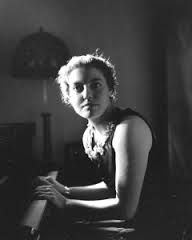
CBButterworth
This is Classical Break on Somer
Valley FM, and I’m Rupert
Kirkham.
Today’s programme, written and
researched by
Mike Burrows, is a tribute to
the composer, George Butterworth.
George Sainton Kaye Butterworth
was born
in 1885, the son
of a lawyer and managing-director
on the railways, and died as
an Acting Captain in the Durham Light
Infantry during the Battle of the
Somme. At about dawn, in August
1916, leading his company in
A trench-digging
action near Pozieres he was
killed
instantly by a sniper in a
moment of sleep-deprived unconcern
for
his own safety. As a soldier,
he had liked to lead from
the front; here, he had made
an elementary slip and raised his
head too high.
Posthumously awarded the Military
Cross, he
lived up fully to what had
been expected of him and thus
to the example of his
grandfather,
an army General. Like many of
his contemporaries of the
privileged middle-
classes, he died as a junior
officer fighting the Hun, his
last
moments spent caught up in the
digging of a trench towards a
well-fortified enemy position amid
the
blasted landscape of a sector of
the Western Front, his body never
recovered, his name added to the
famous Thiepval Monument to many
of
those Allied troops who were
killed
in France or Belgium between 1914
-18 and who have no known
grave. The monument stands not far
from where he was killed. At
the time, the earthwork in which
he fell became known as The
Butterworth Trench.
Let’s hear an arrangement of a
folksong arranged by him, one of
his 11 Sussex Folksongs, Roving In
The Dew. He collected 3
versions
of this song himself, under the
title, Dabbling In The Dew, but
for this arrangement used a
version
taken down by another researcher.
Track 1 Dabbling In The Dew, Arr Butterworth
It is doubtful that George
Butterworth
ever had thoughts of living up
to his Grandfather’s example. Though
an
Old Etonian and graduate of
Trinity
College, Oxford and one who would
have regarded himself as the
social
equal of most of the more
famous victims of the meatgrinder
in
the teens of the last Century –
the first-rate Tennants,
Grenfells, Asquiths
and Horners of this life - was
no conventional patriot, no Tory,
no
euphuist in any aspect of existence.
Whether learning or teaching music – he
taught piano at Radley, and formed
a choir there – he was an
artist of close mouth and practical
activity. He was a
physically strong,
man who smoked a straight Lovat
briar, grew the expected flourishing moustache
in answer to dark, bushy eyebrows
and tended to look as though
smiling at the eyes – lucent eyes
crinkled at the corners, the lower
lids subject to upward pressure from
his cheeks, humorous eyes, their humour
with a touch of irony or
scepticism, perhaps.
They were also watchful eyes. A
graduate in Classics, he attended
the
Royal College of Music from 1910,
a late starter in the College’s
eyes – though a composer from the
age of 9 - who knew where
he was going. The courses disappointed
him, leading nowhere; he left
after
a year. At University, he had
been President of the Music
Society,
noted as one who was
“impatient of humbug.” He had the
clearest ideas of form and
harmony
and had made a study of
folk-music, becoming a staunch
member
of Cecil Sharp’s Folksong
Society. He
had worked through the expected
influences
of the day that wrecked the
work of lesser talents; Wagner
left
his mark, possibly Grieg or
Debussy
and possibly, at the outside, the
colourful and ingenious style of
Slavic
instrumentation. He remained the most analytical
and clearminded of critics, and
certainly
cut through musical problems for
that
late-developer, Vaughan
Williams. At the
end of an evening, he took
his pipe out of his mouth
to suggest in his “gruff, abrupt” manner
that Vaughan Williams write a 2nd
Symphony, The London Symphony, and Vaughan
Williams dedicated it to him
before
its premiere in 1913. When
Butterworth
died, Vaughan Williams felt as
though
utterly bereft; there’s the
matter of
his having volunteered for
war-service
as an ambulance-driver but, in
time, changing his battlefield
vocation to
become a Royal Artillery officer. Perhaps
the death of Butterworth
contributed to
this decision.
George would not have been
impressed
by talk of his bravery in
encouraging his men – mostly
hardbitten ex-
miners - to one more effort, or
by admiration of his Military
Cross –
which only officers could
win. His
men loved him, but that would
have made the error seem all
the more stupid. He would have
kicked himself for making the
mistake
made by chivalrous idiots just
posted
up from home, clever lads who
forgot to duck or who had
no idea how hard it were
to dodge the bullet of an
unseen assailant – the speed with
which
death could be dealt in a
modern War in France.
As a composer, George
Butterworth’s work
has come down to us as
a proof of his technical ability
as well as pure expression; he
seems the most humane but poised
of artists, a man who, quite
possibly attained the very
highest degree
of feeling and polish; not one
of his works appears blemished by
extraneous or awkward details or
developments.
They appear to have been
distilled
and perfected by a musical
magician.
He must have destroyed volumes of
early pieces before leaving for
France –
if not sooner. His complete oeuvre
consists of four orchestral
pieces, a
couple of single songs – one
setting
Requiescat by Oscar Wilde after the
death of his own mother, three
song cycles – one based on poems
from Stevenson’s Songs of Travel, two
on the Shropshire Lad poems of
AE Housman, one on poems
by WE Henley, Love Blows
As The Wind Blows, a book
of arrangements of 11 Sussex
folksongs .
a Suite For String Quartette
and – most famously – the
ever-fresh
four orchestral pieces, the Two
English
Idylls of 1911, the Rhapsody:
A Shropshire Lad, (1912) and
An Idyll: The Banks of Green
Willow (1913).
The Folksong movement in English
music
has been decried by modernists
and
so-called internationalists ever
since its
co-opted member-composers came to
fame. Not one of the brilliant
minds who have pointed out that
the world of folksong
nostalgically revived
was invalid as a form of
artistic expression because dead
on its
feet even as it was obtruded
on the minds of sophisticated
Rightwing
intellectuals, or just plain substanceless
when
contrasted with industrial
machine-reality, has
managed to extirpate the public’s
love
of its Art-music. The point
has so often been
missed that
folksong-and-dance formed the
musical
means of
self-expression and
entertainment of
ordinary people who did
not attend Public
School or University
or hire a suburban piano.
Ordinary
people toiled and died without
mark
save birth, confirmation, marriage
and funeral – unless
they attained the charge-sheet, or
entered the Workhouse.
Let’s hear the two English
Idylls.
The first is based on three
folksongs: Dabbling
in The Dew, whose
subject is unsuccessful wooing, Just as
The Tide was Flowing, a story
of successful wooing and Henry Martin,
in which a man turns to
piracy on the high seas in
order to support his brothers!
Track 2: English Idyll No 1, Butterworth
Butterworth’s use of alto
instruments is
a shading feature – voices we
made
of oboe, clarinet, violas,
cellos, horns,
trombones. The light and freshness comes
from flute, harp, solo trumpet,
violins.
In rounding out the story how
effective his harp runs are. The
bass is unobtrusive but mobile or
provides pedals of depth – a
depth
of earth like firmness. The interplay
of instrumentation is
lively. His use
of harmonics and mutes is as
breathtaking in its elemental
scene setting
as is his sense of drama
and tragedy. Full throated, his orchestra
is a formidable force from which
both Holst and Vaughan Williams
and
many other composers learned, as
the
deep earth settled on its perhaps
one time Wagnerist only
begetter. Constantly,
the blending of timbres is both
subtle and unerringly distinct.
In the English Idyll No 2,
the folksong is Phoebe and Her
Dark-eyed Sailor: in it, a
girl encounters a sailor; he
seeks
to win her; she refuses the
confident well-set up lad until
she suddenly realizes that he is
her betrothed who went to sea
and was thought to have
drowned.
He tried and made his fortune.
Track 3: English Idyll No 2,
Butterworth
People had flocked from the poverty-
stricken land to the cities, where
pay was supposed survivable.
The cities
swelled with increasingly cheap labour with
predictable results. Thousands were killed young
by machines, dust or fibre-polluted
atmospheres and toxic agents, or by
a home-life best imagined from
the prints of contemporary artists. The
workhouse – the being a charity-case –
was merely dreaded more than work
or a cholera- or typhoid epidemic.
No wonder many folksongs sing
bittersweetly
or longingly of love, usually
lost
love, betrayal, death or some
other
form of separation, dalliances
while going
or coming from somewhere, or
sailors,
the season or life-occupation,
the
possibility of making one’s
fortune – with
plenty of fireside beer, warming
spice
and baccy as well. It has
to be remembered that at his
most utile (and, coincidentally
virtuous), the
common man or woman was young,
fit, unmarried, politically
submissive and an
abstainer from drinking, smoking
and sexual
relations. When rich enough to feed,
clothe and house children on one
wage, well, a man and woman
could marry, settle down and
breed
fit young children of the same
make. After all, at a higher
differential, this was how
professionals not
of independent means ought to
live,
to the glory of God and
Capital, and everyone knew what
the
alternative was – to be a pauper
and expected to die. Moral force was
with wealth and the employer;
even
the established church, socially
enmeshed with
the gentry and middleclasses,
would not
or could not ameliorate the
conditions
created by tyrannical Mammon, yet
one
had to conform.
The conflicts in AE Housman’s
A Shropshire Lad are many; but
central to Butterworth’s probable
view of
them would have been that between
living in the countryside or
coming
to live and work in the
City, in London, as Housman had
done, and having to hide one’s
own very nature. Facing up to
an inimical, godless universe of
chance
and ill-fate, and to society’s
capacity for damning short-lived
man’s
non-existent soul to cowering
under
the threat of social disgrace and
even capital punishment as a
criminal
was a peculiarly Victorian
dilemma – particularly
after the trial of Oscar
Wilde.
The covertly homosexual Housman
described himself
as an Epicurian, and Butterworth
likewise
was no believer in the Christian
God, but both must have felt
themselves still to be swimming against
the tide of middleclass
conventional religion,
politics and morality. Both loved
the
countryside, the seasons, the
general goodheartedness
of unsophisticated people. The countryside and
country folk were still there,
still
sang and danced in reaction to
life. The beauty of Butterworth’s orchestral
evocation of Spring in the Rhapsody
is superfine from the opening on
string harmonics, but also as
though
of Nature itself. The woodwind, violins,
violas and cellos shade the music
to perfection, the brass
affirmatory of
warmth, youthful happiness or dread
fate.
To judge from the use of
harmony, Butterworth’s study of
music must
have included the works of
Richard
Strauss. I’d venture to suggest that
no Straussian nor expressionist
composer achieved
a starker, harsher climax than
that
of this piece in which vaulting
fanfare builds and is broken by
the tritone as in Sibelius. A
moment of horror that stays with
one. (The whole tone scale from
the harp at close may symbolize
death by drowning). The day is
not saved by the Loveliest of
Trees motif that has opposed it,
all along, but by the phrase
of last line of the song.
“To see the cherry hung with
snow.” Butterworth’s
modification, qualification or distortion
of song-themes is a brilliant
and original feature of his
orchestral
work: he develops them as might
a symphonist. He searches out the
harmonic implication or resonance
to the
last drachm (dram) or scruple. The
harp’s rippling wholetone scale
near the
end has been suggested to
symbolize
a self-drowning.
The main theme of the Rhapsody,
by name, Loveliest of Trees, is
a folksong that was in fact
entirely Butterworth’s own. In its original
form, it is the first song
in his first cycle of Shropshire
Lad settings. He ventriloquized Housman’s and
Great Britain’s Lad in a song
indistinguishable from those that
move by
every means but the
intentional. To
adapt Wilfred Owen, the poetry of
the art-musician inspired by
folksong
is in the pity. No wonder
the soldiers of his company
thought so well of him.
In Butterworth’s music it is
never,
to use the Masefield couplet, “The
smoke of…farms lifts blue in
air/As though man’s passionate mind
had never suffered there.”
Track 4: Rhapsody – A Shropshire
Lad, Butterworth
Turn to 1913 and another
orchestral Idyll, The Banks of Green
Willow, based on two folksongs, the
first eponymous – a woman elopes
with
a captain, believes that she will
die in childbirth and begs him
to throw her over the side –
and the second, Green Bushes, in
which a fickle maid finds a
new lover.
It’s interesting that every
Butterworth orchestral
piece is in an arch
construction:
first, there is the proposition
of
a beautiful tune and contrast
material;
then, there is a vehement quasi-
development section; lastly,
there is a
restatement of the opening
material – long
drawn out, becoming hushed,
fading into
a dying fall, almost unbearably
poignant,
nostalgic, regretful but too
touching not
to be consoling and unforgettable
Track 5: The Banks of Green
Willow, George Butterworth
Perhaps folk-music survived even
the
worst of the 19th
Century’s
murderous advancement of Feudal
Capitalism as the
basis for a modern society, partly
thanks to the Folksong Society
and
young composers from privileged,
even landed,
backgrounds who bothered to
listen and
hear; folk-music was popular
self-
expression more real than
music-hall
popular songs or polite
villa-ballads
provided by paid hacks who might
have wished to write symphonies. It
was national self-expression; it
came
of the people, the nation rather
than its rulers – as glorified by
the latest in Art
music-technique,
those, for one thing, who
bothered
to note it down as played
or sung, not as taught by
the Brahmsian, Dvorakesque
Professor Stanford. Modal,
not diatonic, pentatonic
folk-music could
be embellished by being played
over
chromatic harmonies, subjected to
direct strokes
of development, manipulation,
transformation, even counterpoint –
and gain. There was never the
intention to seem
sophisticated. Sophistication is
not a positive value – it means
capable of glib persuasiveness. Not exactly
a desideratum in one who pays
tribute to the victims of the
19th Century British
holocaust who,
trapped and left with little or
no real comfort, leisure or
notice
created the only natural,
meaningful form
of music we had to distinguish
our artworks from superior
European models.
Everyone, not the educated
connoisseur, critic
or composer, owned folk-music –
felt
its pathos or humour – often, its
defiant humour and unintentional
pathos. Socialists
might just look back to the
17th Century and think
of Commonwealth –
wealth held in common. Holst,
Vaughan
Williams, Butterworth, Grainger,
Moeran and many
others will not appeal to those
who think their music easy or
unpolitical. Anyone with half an ear
for music will hear what their
music may mean – and find its
influence compelling, magical and
inexhaustible, the
musical equivalent of a powerful
poetic
tradition stretching back to
Shakespeare or
even Chaucer – a bringing
together of
the classes, a levelling process,
a
voice for us all, harmonies for
our comedies and tragedies, our own
too-often oppressed and
distracted lives.
Even if in the Nineteenth Century
the devil preached from holy
scripture,
still, pace the hymn or parlour
song writers, he had almost none
of the best tunes. True feeling
was in the distinct lyrics, ballads
and dances of semi-literate and
self-taught musicians. Ribald, raucous, insolent
or hail fellow, well-met,
wistful,
grieving, seeking solace, folk
tunes held
the truth of a materialistic,
deeply
false and unspeakably cruel age
that
had trashed earth and society for
resources and productivity,
profit and power.
How heartrending that Acting Captain
Butterworth failed
to duck. Sometimes, it is hard
to see what he fought and
died for on the Somme. His
music though is a glory of
his generation and our country
and,
as the Great War was simply
one more huge atrocity of
Industrialization,
capital and utility, his pieces
of
lifelong-taken pains are made
still
more poignantly beautiful – as
well as
ironically bittersweet - by its
being in
part his and his lost generation’s
unconscious memorial.
How would his music have developed
if he had returned to it
after the Great War?
That is
unknowable; like Ivor Gurney, Butterworth was
his own man, his future tendencies
not to be predicted.
He left
one unfinished orchestral piece. Fantasia. He
left off work on the full-
-score in the early months of
1914. No-one knows
what
happened to the short-score.
The
work was completed not long ago
by Kriss Russman. An
eight-minute movement,
scored for larger orchestra than any
that Butterworth had used before –
but with no harp nor percussion! -
it makes for fascinated listening, though
always with the caveats that a
major composer’s ideas are his own
and subject to any change he
likes, and his final intentions are
not divined by editors or, as
in this case, a talented fellow-
composer who helps fragments across within
composition of his own.
It contains
a lovely hushed opening, a long
folksong-like theme that reminds one
of the Somerset Sheep-shearing Song;
motifs from Butterworth’s own orchestral pieces,
fragments of Loveliest
of Trees and
folksong, The Banks of
Green Willow.
The first 3 minutes 45
seconds are Butterworth’s, ending
in a vivace marking and a
tune related to the melody he
used to set Housman’s poem, When
I was One-And-Twenty.. Russman begins:
passes back the running to the various
other motifs; the solo trumpet fanfares
twice in the course of a phase
uncertain in tone or atmosphere, yet
still holding the attention.
What happens next is a rejigging
at speed of the wholetone climax
of the Rhapsody, A
Shropshire Lad,
but then, the Fantasia-material
is brought
most movingly to a passionate, almost
Mahlerian unfolding of rich false relations
and enharmonic changes – wonderfully poignant, passionate
and compelling: the
main theme finds
its apotheosis in aspects of others.
The enlarged – even massive-sounding -scoring
favours bass and treble, with modulations coming
from within the alto-register. Hair-raising.
The violins are supported in their
unison by sonorous brass and woodwind
harmonies. It is an
all-too-
short flight of inspiration, but Butterworth
himself was no chinless rhapsodist, but a
Laconian among British composers of his
time. From there, the
music dwindles
as though suddenly shy and elusive
after such loveliness.
Butterworth fades into
the shadows. Folksong
and dance, Tudor
church- or consort-music go with
him. What should he have written?
Here, the coda is in all
senses inconclusive, something unprecedented in
Butterworth’s
own work save in his having left
behind less than the torso of
a possibly great Fantasia…
Memories of the pieces heard
Earlier in the programme are rife
but welcome, and there is that very
likeable – but brief - hint of a dance-episode
that Butterworth as
a folk-dancer knew well how
to encompass. Film
exists of his
demonstrating the steps for such a
dance! Also, there
are moments somewhat
akin to Copland’s Appalachian
Spring…
This was Classical Break, on
Somer
Valley FM, and I’m Rupert
Kirkham.
Today’s programme was researched
and written
by Mike Burrows. We hope you
enjoyed it and will tune in
again soon. We leave you with
Fantasia, sketched by Butterworth
and “realized”
by Kriss Russman. Goodbye!
Track 6: Fantasia,
Butterworth/Yates